Break the Mould
The UK's first 3D body-scanning and printing art installation — a concept-to-launch experience that reached 60,000 people and put Developing Dreams in front of the BBC, ITV, and the Guardian.
The first 3D body-scanning and 3D-printing art installation in the UK — a concept-to-launch experience that reached 60,000 people, appeared in 35 media outlets, and put Developing Dreams in front of the BBC, ITV, and the Guardian.
- Client
- Brighton Digital Festival
- Sector
- Public art installation
The brief
Brighton Digital Festival 2013 needed something that would make emerging technology feel tangible, human, and worth talking about. We wanted to create something that brought people in off the street, gave them a genuine experience with cutting-edge technology, and left them with something physical to take away.
The challenge
3D scanning and printing in 2013 was still largely abstract to most people — a news story, not an experience. The challenge was to make it visceral and personal, and to do it with roughly four months from idea to launch: a concept strong enough to earn serious press attention, a technical setup that could handle hundreds of participants across multiple venues, and a spatial experience that felt like art rather than a trade-show demo.
Our approach
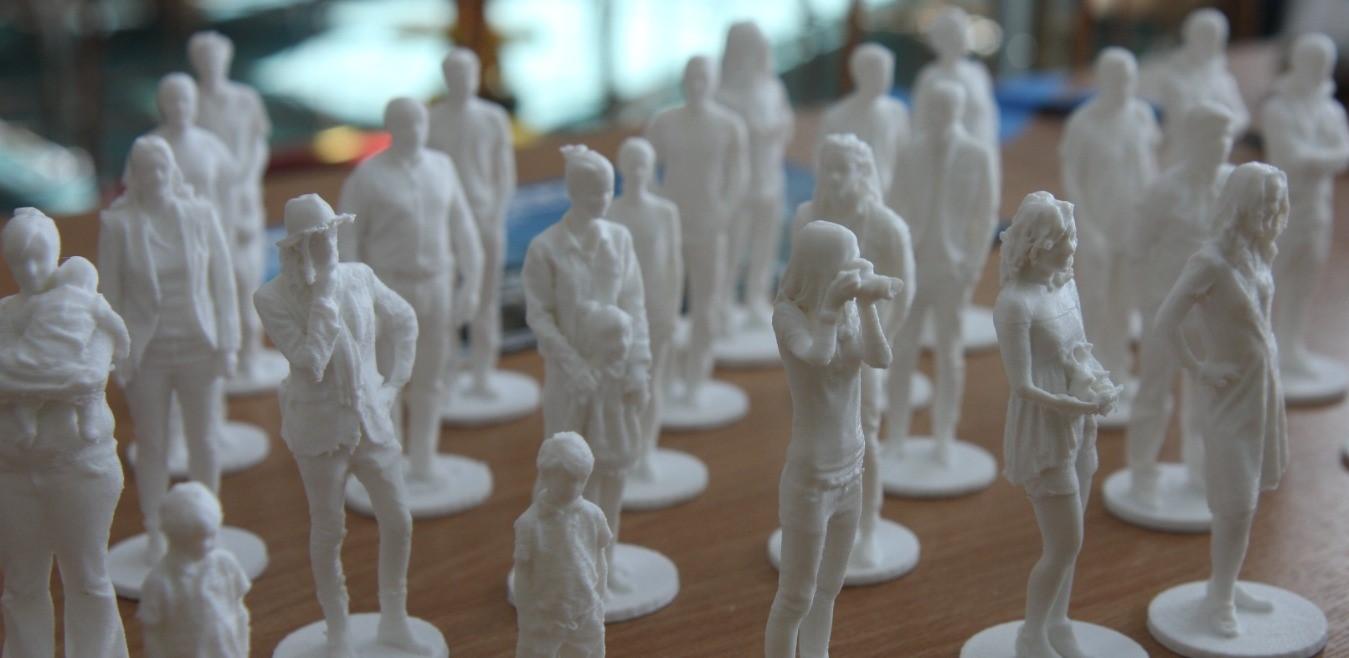
We brought together three collaborators whose strengths complemented each other precisely: Developing Dreams led concept, production, funding, and project management; 3Dify contributed the bespoke 3D body-scanning rig, custom-built as nothing suitable existed off the shelf; and Italian artist Emilia Telese shaped the artistic vision, including the installation's centrepiece — a giant womb-like sculpture that participants walked inside to be scanned and then watched themselves "reborn" as a miniature 3D-printed figure.
You didn't watch a demonstration — you stepped inside a sculpture, became the subject, and walked away holding a physical version of yourself.
The experience was designed to be intimate and memorable — you stepped inside a sculpture, became the subject, and walked away holding a physical version of yourself printed in bioplastic. To manage demand, which outstripped expectations, we introduced a booking system and were fully booked within days of launching.
Solution
A touring interactive art installation that made emerging 3D-scanning technology visceral and personal, generating major national press coverage along the way.
We delivered
- Concept & production
- Arts Council funding
- Sponsorship & partnerships
- 4-venue festival tour
- BBC World Service broadcast
- International media campaign
The outcome
- 400+ scanned & printed
- 60,000 people reached
- 35 media outlets
- 194M potential reach
- Booked out within days
In their words
“Break the Mould was unquestionably one of the highlights of Brighton Digital Festival 2013. A very visible art installation offering people a fun, hands-on experience with a cutting-edge technology - it really was a perfect fit for what the Brighton Digital Festival is all about.”
“A ground-breaking concept that allowed people to understand the potential of the 3D printing world in a very tangible and personal way.”
“During and after Break the Mould, the publicity organised by Developing Dreams had a measurable impact on our web traffic and social media interactions. The event also generated new leads for our business.”
Where AI fits next
Break the Mould was ahead of its time, and still is as a model for human-centred technology experiences. Building it today, we'd layer conversational AI into the experience — an ambient voice inside the sculpture, or a personalised message generated and printed with your miniature — and use AI to speed up booking and 3D-scan processing.
Services & stack
Concept & production · Funding & sponsorship · PR & media · Installation design