
Could Organic Intelligence solve the AI energy crisis?
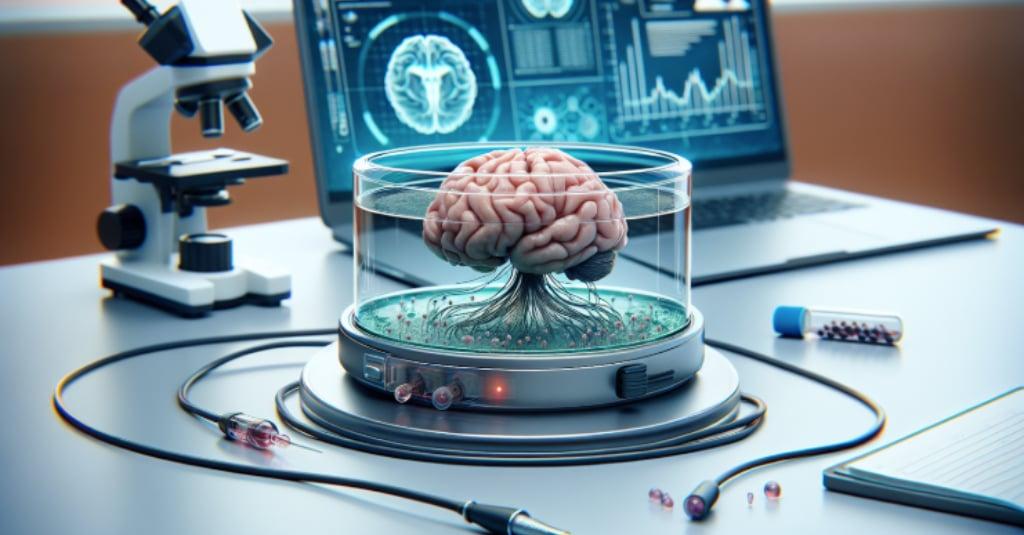
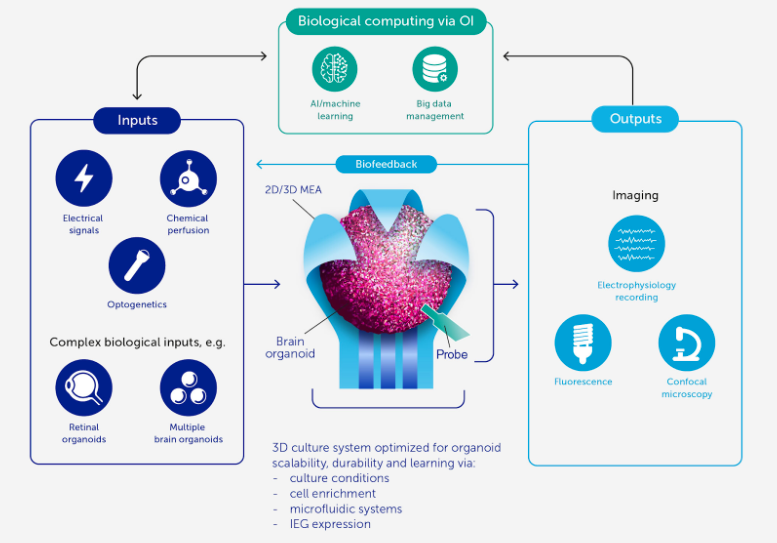
Organic Intelligence (OI) is a rapidly emerging field seeking to develop the ‘wetware’ of science fiction by creating biological computers through the use of organoids – artificially grown masses of cells or tissues originating from stem cells, essentially creating a living computer.
Leading the charge is FinalSpark1, a dynamic Swiss start-up, leveraging brain organoid technology to craft bioprocessors that outshine traditional processors in energy efficiency.
Some of the things they have already achieved are phenomenal, such as the organoids learning to play Pong by using environmental variability as feedback, an approach driven by their groundbreaking path entropy-inspired solution2.
A dopamine reward system is used to train the organoids. FinalSpark claims that biological neurons can compute using over 1 million times less energy than current digital processors, providing a greener path for the growing and energy-hungry AI industry.
Meanwhile, the Brainoware system from Indiana University Bloomington showcases similar prowess, pairing brain organoids with electronic chips and AI tools to perform basic speech recognition3, spotlighting organic AI’s impressive energy-saving capabilities4.
The Potential of Brain Tissue Organoids
Brain tissue organoids are at the heart of this breakthrough approach to organic AI. These organoids, crafted from human brain cells, could be the answer to achieving colossal reductions in AI’s energy use.
Paired with electronic chips, these bio-inspired systems display exceptional efficiency and complexity. FinalSpark grows organoids with about 10,000 neurons packed into a blob of tissue half a millimetre thick. Researchers are ambitiously aiming to expand these organoids from 50,000 cells to a whopping 10 million neurons, striving to rival the processing power of a tortoise’s brain. This scalability showcases organic AI’s potential to meet growing computational demands while keeping energy efficiency center stage.
Integrating organic AI into computing systems presents a practical pathway to tackling the energy challenges sparked by AI progress. As the sector’s energy consumption rises, organic AI emerges as an alternative that slashes environmental impact while syncing with global sustainability ambitions.
By leveraging the natural efficiency of biological systems, this pioneering approach represents a new chapter in AI development. Still, perfecting biocomputer interfaces, scaling organoid sizes, and enhancing accuracy remain key challenges critical for organic AI’s future in transforming fields like artificial intelligence and neuroscience.
Addressing Global Energy Needs
AI data center energy consumption is forecast to grow at a compound annual growth rate (CAGR) of 44.7%, reaching 146.2 Terawatt hours (TWh) by 20275.
FinalSpark’s research team says that training a single large language model like Chat GPT-3, required 10 gigawatt hours or about 6,000 times the energy that one European citizen uses in a year.
Meanwhile, the human brain operates its 86 billion neurons using just 0.3 kilowatt hours per day. The incorporation of organic AI into computing systems offers a practical solution to the energy challenges posed by AI advancements. As the AI sector’s energy consumption grows, organic AI provides an alternative that not only reduces environmental impact but also aligns with global sustainability goals.
By tapping into the natural efficiency of biological systems, this emerging technology is paving the way for a new era in AI development.
However, challenges remain in perfecting biocomputer interfaces, scaling organoid size, and improving accuracy—all pivotal for the future potential of organic AI to transform fields such as artificial intelligence and neuroscience.
Navigating Ethical Frontiers
Advancing organic AI raises many ethical questions that demand careful consideration. We need to address issues around using human-derived materials, the risk of creating sentient machines, and the wider societal impacts of such cutting-edge technology.
As we venture further into organic AI, it’s crucial to maintain an open and transparent conversation with the public and stakeholders, guiding the ethical development and deployment of these potent technologies.
Setting clear ethical standards and regulatory frameworks is essential to ensure organic AI’s responsible and sustainable integration into society, guarding human dignity and the natural world while unlocking extraordinary technological possibilities.
Conclusion
Organic AI presents an exciting frontier in technology, offering a compelling potential solution to the daunting energy demands of artificial intelligence systems.
FinalSpark’s innovative approach, by harnessing the intrinsic efficiency of biological systems, paves a promising path toward a more sustainable future in AI development.
As this technology matures, the potential for significant energy savings could transform industries, aligning with global sustainability objectives and encouraging responsible innovation. Through continued research, ethical consideration, and strategic partnerships, organic AI stands to redefine the landscape of computing, marking the dawn of a greener revolution in artificial intelligence. This isn’t just about using and exploring cutting-edge technology for the sake of it; it’s about creating a sustainable future.